Amazon parrot
Medium-sized, speech-mimicking parrots native to the Americas.

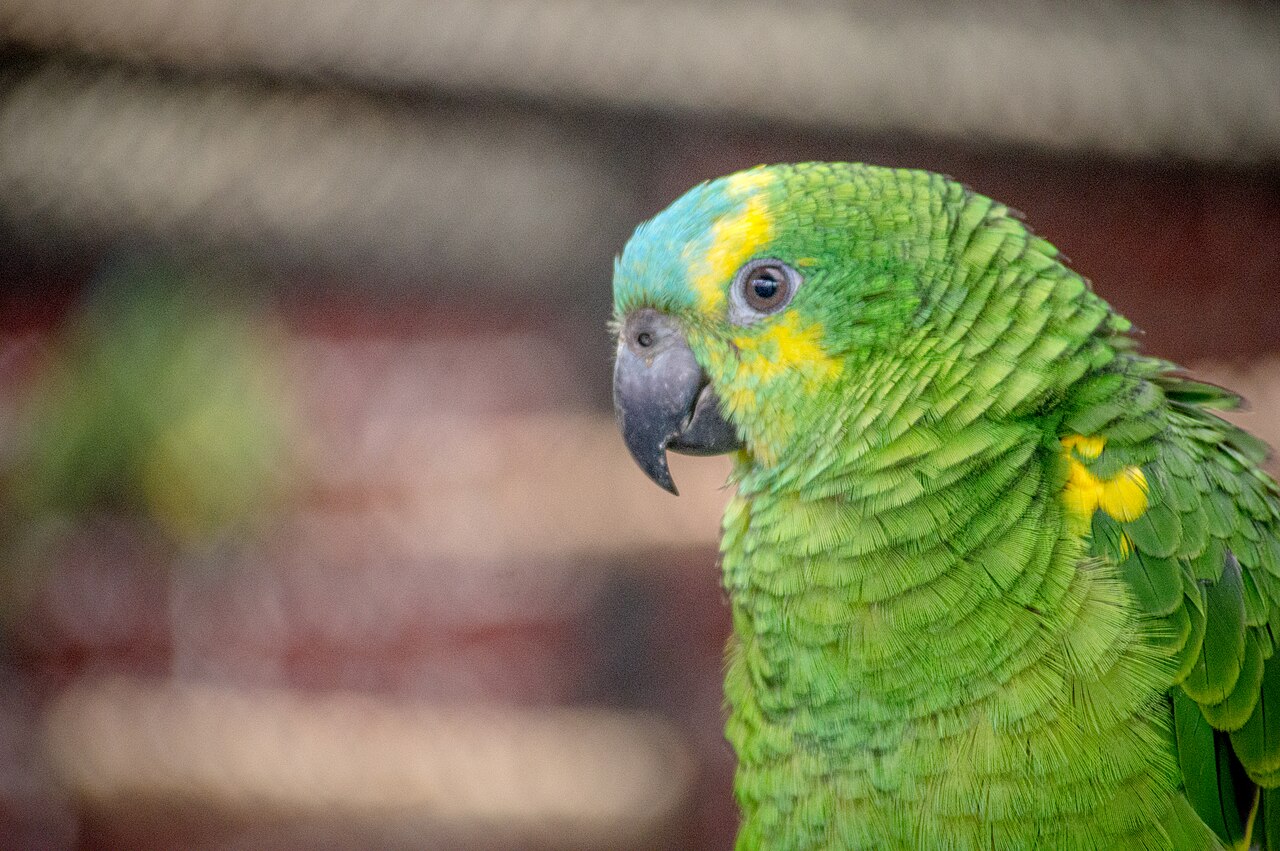
Charles J. Sharp · CC BY-SA 4.0
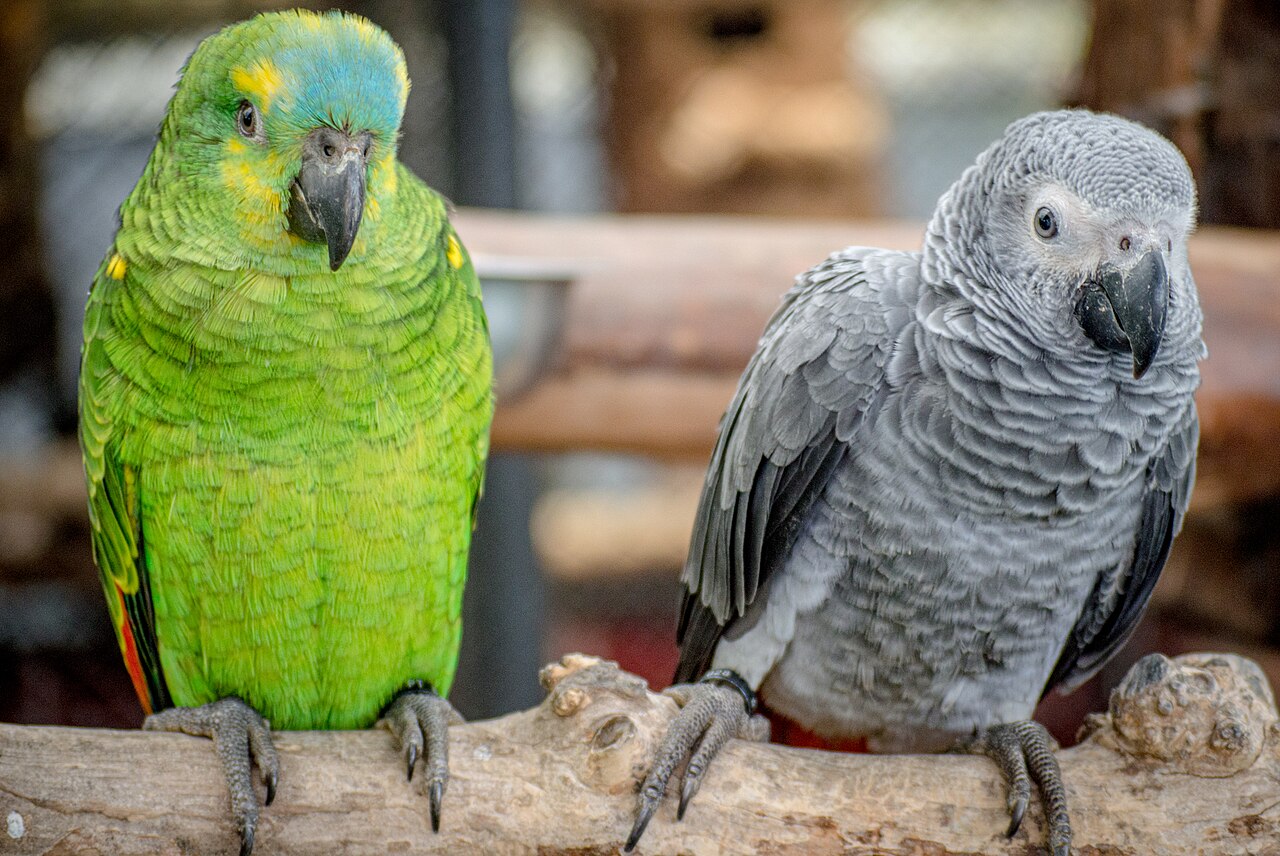
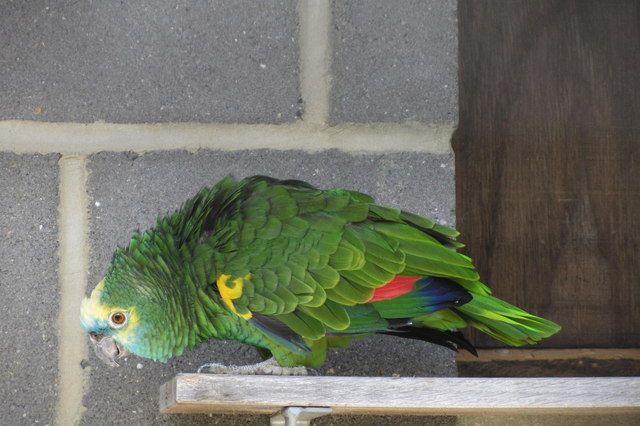
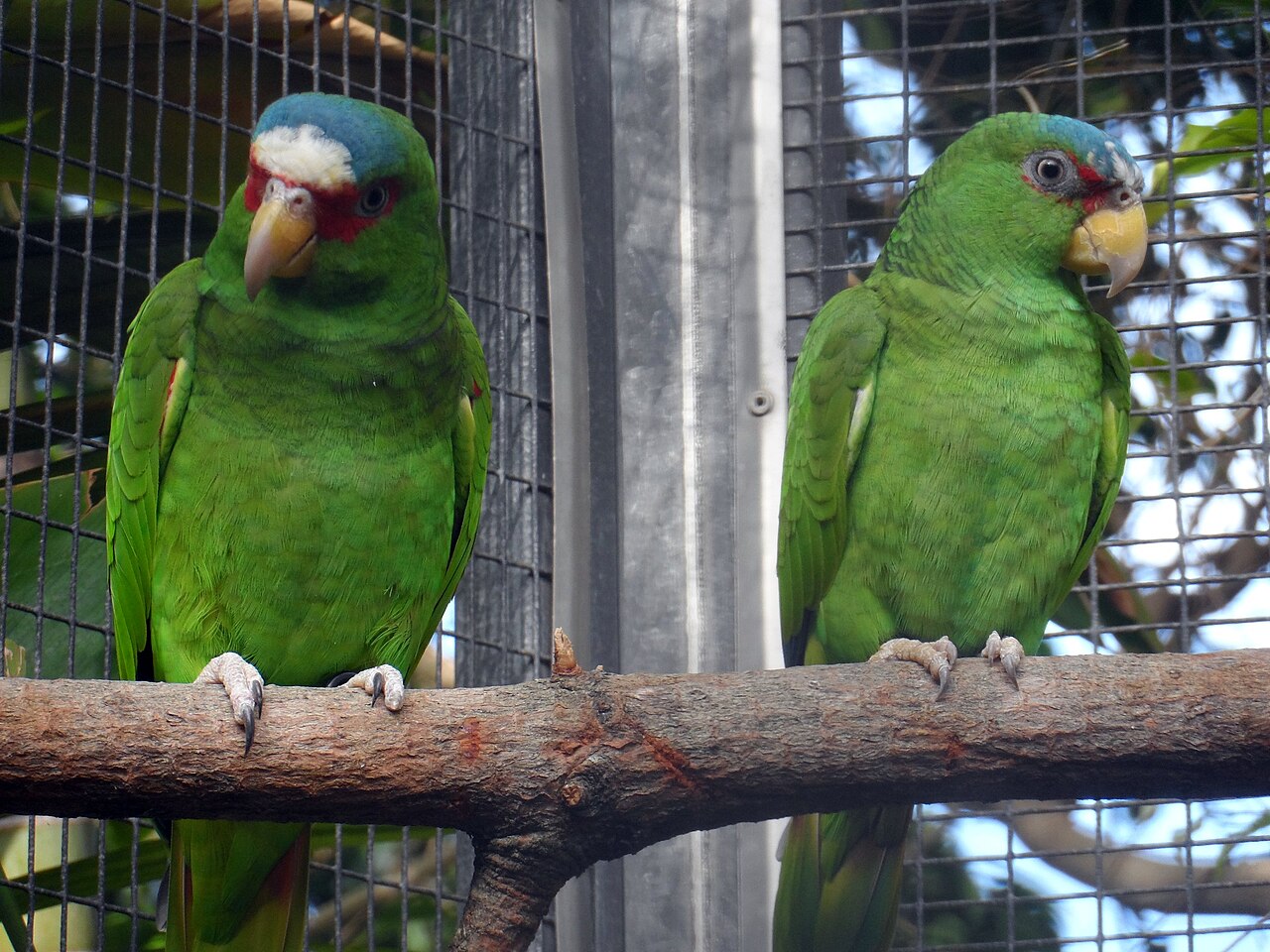
Amazon parrots are medium-sized, short-tailed parrots in the genus Amazona, native to the Americas from South America to Mexico and the Caribbean. They are predominantly green with vivid accent colors, feed on seeds, nuts, and fruits, and are known for their ability to mimic human speech. This has made them popular as pets, leading to wild capture that has threatened some species, though the United States and European Union have made such capture illegal. Feral populations exist in various parts of the world.
- genus
- Amazona
- type_species
- Mealy amazon (Amazona farinosa)
- number_of_species
- About 30
- native_range
- South America to Mexico and the Caribbean
Lore & Background
The name derives from 'Amazone,' given by the Comte de Buffon, who believed they were native to Amazonian jungles. The genus contains about 30 species, including the Cuban amazon, festive amazon, and red-necked amazon. The taxonomy of the yellow-crowned amazon complex is disputed, with some authorities splitting it into up to three species based on plumage and bill color, though mtDNA analyses do not support the traditional split. The yellow-faced parrot was formerly placed in Amazona but has been moved to the monotypic genus Alipiopsitta.
Reader's Guide
Amazon parrots are significant for their role in the pet trade, driven by their ability to mimic human speech and other sounds. This popularity led to extensive wild capture, threatening some species and prompting legal bans on wild capture in the United States and European Union. They are also notable for their feral populations established in diverse regions, including southern Africa, Europe, and major cities in the Americas. Their breeding behavior shows variation between mainland and West Indian species, with differences in foraging frequency and breeding season timing. The genus includes several hypothetical extinct species from Caribbean islands, known only from early travelers' accounts and lacking physical evidence. Their taxonomy remains partially unresolved, with ongoing debates about species boundaries and the validity of proposed new species.
Did You Know?
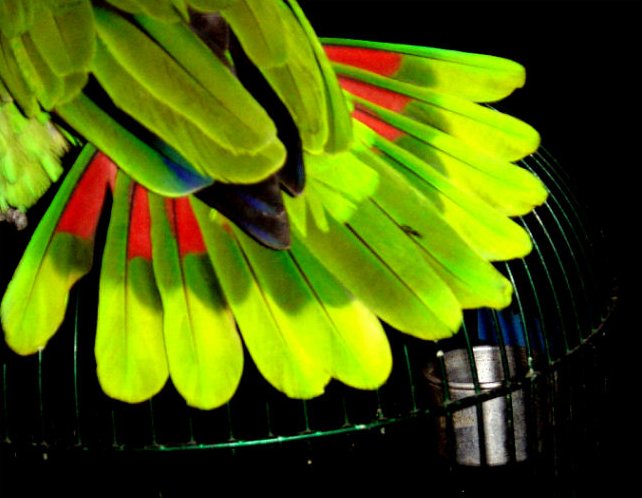
- The turquoise-fronted amazon is sexually dimorphic when viewed in the ultraviolet spectrum, invisible to humans.
- Feral populations of amazon parrots exist in Italy, Spain, Portugal, California, Florida, South Africa, and several South American cities.
- The Martinique amazon and Guadeloupe amazon are recognized as extinct species based on historical accounts and physical evidence, not purely hypothetical.
Deep Roots in Gondwana
Parrots carry a deep evolutionary lineage that molecular evidence places at roughly fifty-nine million years ago, with a plausible range stretching between sixty-six and fifty-one million years. The geographic concentration of the greatest parrot diversity in South America and Australasia points toward Gondwana as the cradle of the order, with Australasia likely serving as its evolutionary heartland. Yet confirming this narrative through fossils has proven extraordinarily difficult. A fifteen-millimetre fragment of a lower bill recovered from the Lance Creek Formation in Wyoming was long celebrated as a seventy-million-year-old parrot remnant, but subsequent analysis suggests it may actually belong to a caenagnathid oviraptorosaur, a non-avian dinosaur that merely resembled a bird in its beak shape. The first uncontroversial parrot fossils emerge from tropical Eocene Europe around fifty million years ago, while the earliest anatomically modern specimens date to roughly twenty-three to twenty million years ago. Strikingly, the Southern Hemisphere yields no parrot-like remains older than the Early Miocene, leaving a conspicuous gap that complicates the Gondwanan origin story. Genomic work further reveals that parrots are the closest living relatives of songbirds, together forming a clade that sits as sister to the falcons.
A Vivid Tapestry of Form
Among all bird orders, parrots stand out for their extraordinary range of body sizes, making them the most variably sized group in the avian world. Their plumage tends toward bold, vivid coloration, and many species display multiple hues simultaneously, yet males and females are generally indistinguishable to the human eye in terms of visual differences. Structurally, every parrot shares a powerful, strongly curved beak, an upright posture, and feet equipped with claws, adaptations that together support a lifestyle built around gripping, climbing, and manipulating food. Intelligence is another hallmark: parrots rank alongside corvids such as ravens, crows, jays, and magpies as the most cognitively advanced birds, and the capacity of certain species to mimic human speech has only deepened their appeal as household companions. Taxonomically, the order encompasses roughly four hundred and ten species distributed across one hundred and one genera, organized into four families: the Old World parrots, the African and New World parrots, the cockatoos, and the New Zealand parrots. Their distribution is broadly pantropical, though a handful of species have pushed into temperate zones, with the richest concentrations found in South America and Australasia.
Under Siege
Parrots face a conservation crisis unmatched among wild bird groups. Approximately one-third of all parrot species are currently threatened with extinction, and their aggregate extinction risk, as measured by the IUCN Red List Index, exceeds that of any other comparable avian group. The pressures are multiple and compounding: wild birds are trapped for the international pet trade, hunted for food or sport, and lose their forest homes to deforestation and land conversion. Invasive species further intensify competition for limited nesting cavities and food resources. The result is that parrots endure more exploitation than any other group of wild birds on the planet. The pet trade's footprint is staggering: as of 2021, roughly fifty million parrots, about half of the entire global population, live in captivity, with the overwhelming majority kept as pets inside people's homes. On the brighter side, conservation programs targeting well-known, charismatic species have delivered an unexpected bonus: by protecting the ecosystems those flagship birds inhabit, they simultaneously shield the many less glamorous parrot species sharing the same forests and habitats.
The Three-Limbed Climber
Parrots are the only known creatures on Earth capable of true tripedalism. When scaling vertical surfaces, they deploy their necks and beaks as functional limbs, generating propulsive forces that equal or even exceed the forces a primate's forelimbs produce during vertical climbing. This allows them to move upward in a cyclical, three-pointed gait, a locomotor strategy with no parallel in the animal kingdom. In the wild, nearly all parrots seek out natural tree hollows for nesting, and in captivity they are provided with artificial nest boxes that serve the same purpose. Their eggs are white, and the chicks that hatch are altricial: born helpless, with downy feathers and closed eyes, entirely dependent on parental care. Nutritionally, the parrot diet is overwhelmingly plant-based, centered on seeds, nuts, fruit, buds, and other vegetation. A small number of species occasionally supplement this with animal matter or carrion, while lories and lorikeets have specialized their feeding to draw floral nectar and consume soft fruit.
Gallery
Frequently Asked Questions
What is an Amazon parrot?
Amazon parrots are a group of medium-sized, short-tailed parrots belonging to the genus Amazona. They are most recognizable for their predominantly green plumage accented with bright colors on the wings, face, or head.
Where are Amazon parrots native to?
These birds are indigenous to the Americas, with their range stretching from South America northward through Mexico and across the Caribbean islands. They inhabit a variety of forest and woodland habitats throughout this region.
What do Amazon parrots eat in the wild?
In their natural habitat, Amazon parrots forage primarily on seeds, nuts, and various fruits. Their diet reflects the diverse plant life available across their wide geographic range.
Why are Amazon parrots so popular as pets?
Their well-known talent for imitating human speech has made them a favorite among bird keepers for generations. However, this popularity has led to significant wild capture, prompting the United States and the European Union to ban such practices to protect wild populations.
How many species of Amazon parrot exist?
The genus Amazona contains roughly thirty recognized species. The type species, from which the genus name derives, is the Mealy amazon (Amazona farinosa).
More in Parrots And Songbirds 1-17
Spotted an error? Know more?
This is a living reference — every entry is fact-audited, and reader corrections feed straight into our audit queue. Suggest an edit · See this site's audit record