Cotinga
Frugivorous passerine birds of Central and South American forests.

Melissa McMasters from Memphis, TN, United States · CC BY 2.0
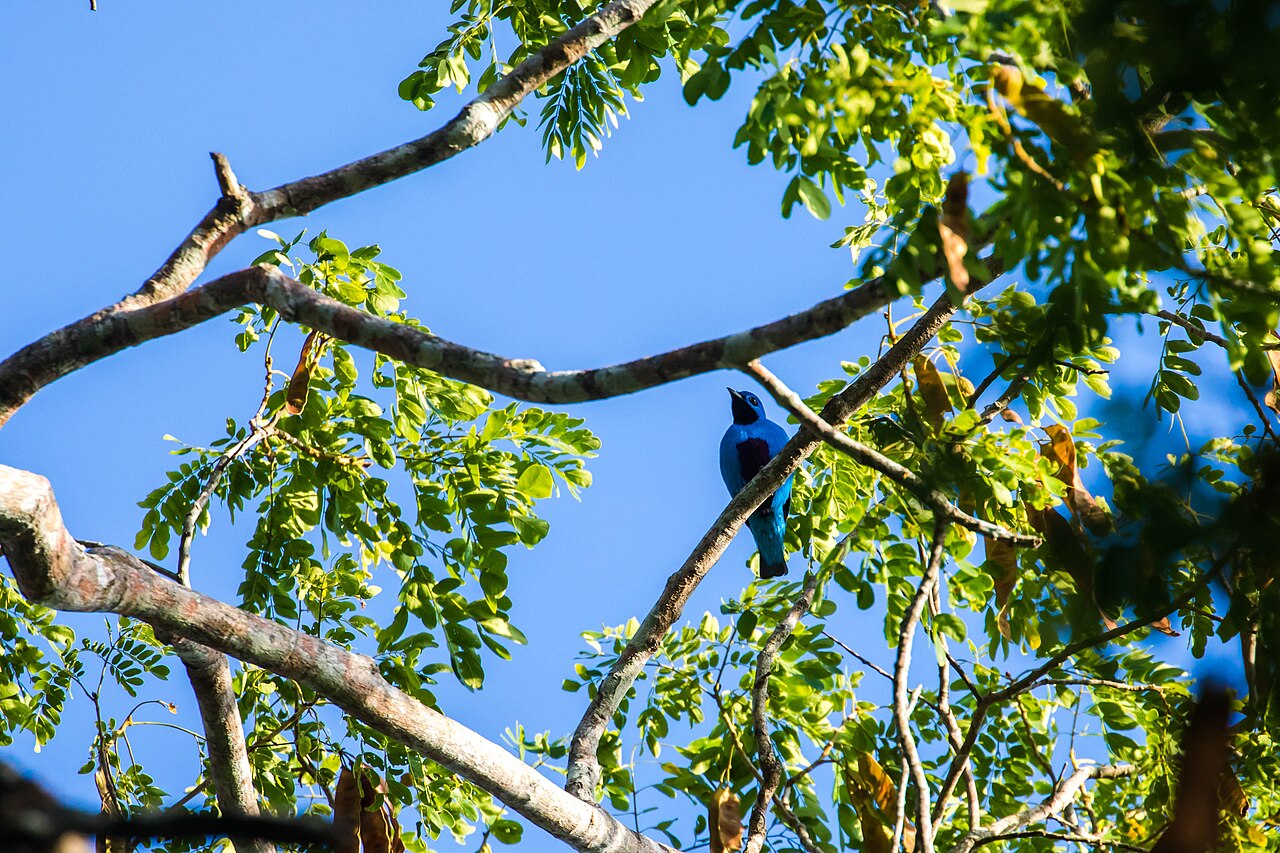
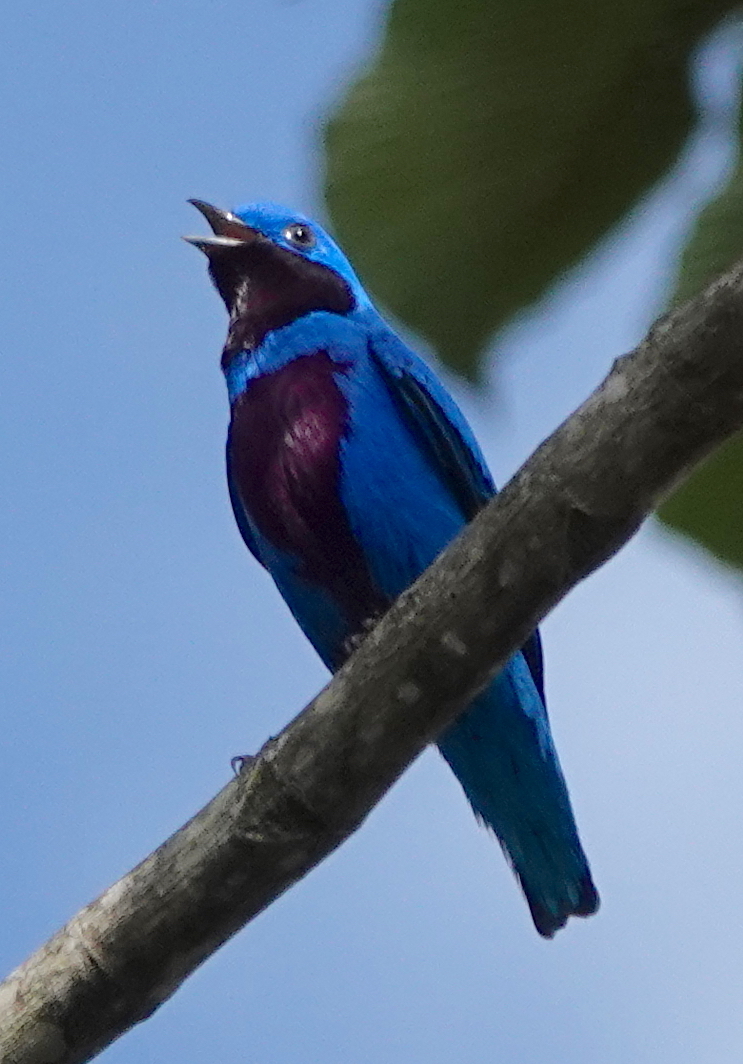
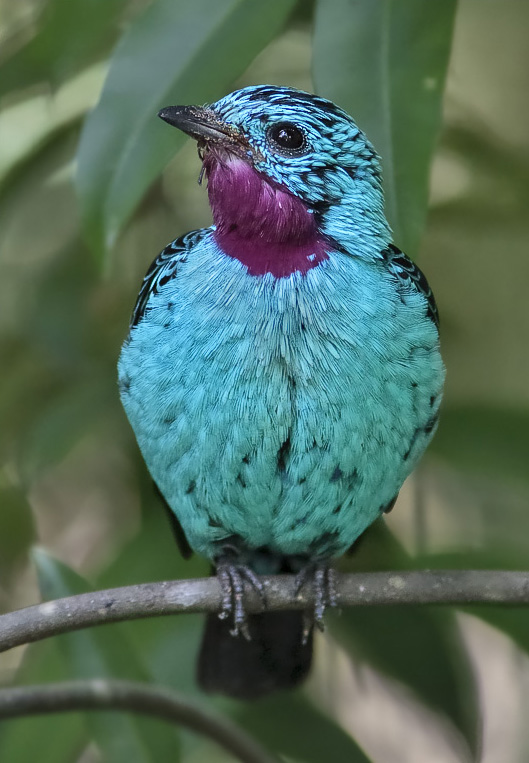
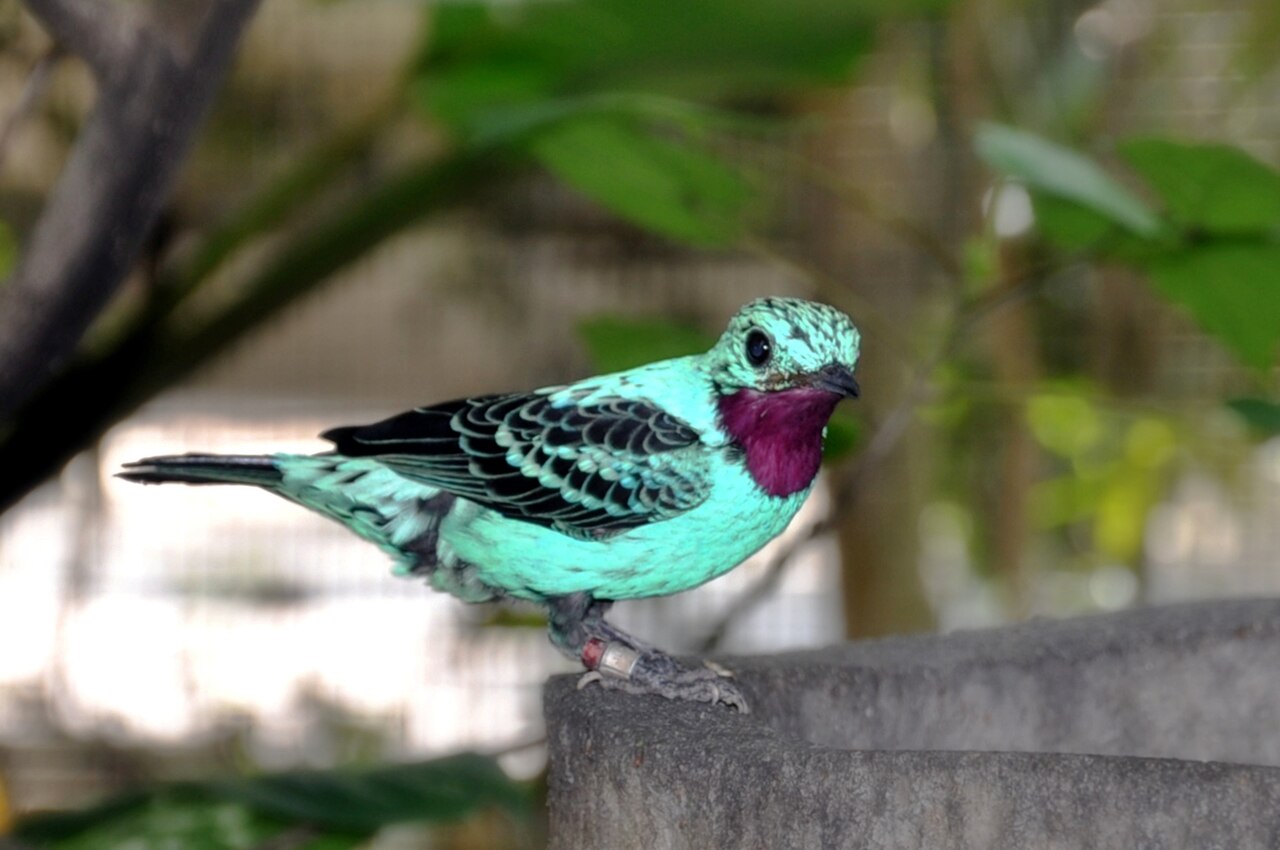
Cotingas are a large family, Cotingidae, of suboscine passerine birds found in Central America and tropical South America. They are birds of forests or forest edges, primarily frugivorous, with broad bills, hooked tips, rounded wings, and strong legs. Their size ranges from the 12–13 cm fiery-throated fruiteater to the 48–51 cm Amazonian umbrellabird.
- family
- Cotingidae
- introduced_by
- Charles Lucien Bonaparte
- number_of_species
- 66
- number_of_genera
- 24
- size_range
- 12–13 cm to 48–51 cm
- habitat
- Deserts, open woodlands, coastal mangroves, humid tropical forests
Lore & Background
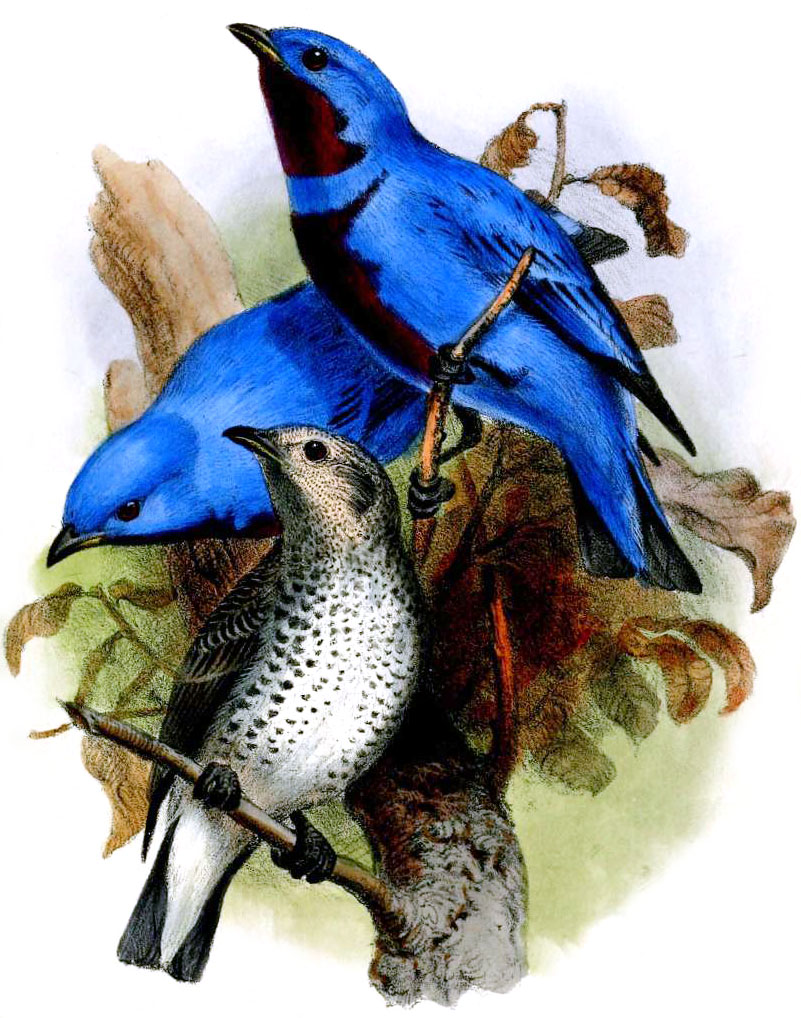
Cotingas vary widely in social structure, with roughly half of species having biparental care and half where males play no part in raising young. In species where only females care for eggs and young, males often gather in leks for striking courtship displays, resulting in bright colors, plumes, or wattles, as seen in the Guianan cock-of-the-rock and umbrellabirds. Lekking species like bellbirds and screaming piha have distinctive, far-carrying calls, while canopy-dwelling genera such as Carpodectes, Cotinga, and Xipholena gather high in trees; male cocks-of-the-rock display on the ground.
Reader's Guide
Cotingas are significant as a diverse family of suboscine passerines that illustrate a range of social and reproductive strategies, from biparental care to lekking systems with extreme sexual dimorphism. Their nests vary from flimsy structures where eggs are visible from below to solid cup nests and mud nests attached to cliffs. Clutches comprise one to four eggs, with incubation lasting 15–28 days and fledging at 28–33 days. They face serious threats from habitat loss. Some species formerly placed in Cotingidae are now in Tityridae.
Did You Know?
- Cotingas range in size from the 12–13 cm fiery-throated fruiteater to the 48–51 cm Amazonian umbrellabird.
- In species where only females care for young, males often gather in leks and have bright colors, plumes, or wattles.
- The purple-throated fruitcrow lives in mixed-sex groups where one female lays an egg and others help feed the chick insects.
- Some cotinga nests are so flimsy that the egg can be seen from underneath, possibly to avoid predators.
Taxonomic Home Within the Suboscines
Cotingas belong to the family Cotingidae, which sits within the Tyrannides infraorder — one of two major divisions of the Tyranni suborder. This infraorder encompasses every suboscine species found in the Americas, with the sole exception being the broad-billed sapayoa, which is assigned to the separate Eurylaimides infraorder. Within the Tyrannoidea superfamily, cotingas share a close phylogenetic neighborhood with manakins (Pipridae), tityras and sharpbills (Tityridae), and tyrant-flycatchers (Tyrannidae). The suborder takes its name from the type genus Tyrannus, the tyrant-flycatcher, yet cotingas occupy their own distinct family within this richly diverse clade.
Deep Roots in South American Evolution
The evolutionary story of cotingas is inseparable from the broader narrative of suboscine birds, which first appeared in South America roughly 50 million years ago. While the suboscines as a whole later spread into the Old World — most likely traveling across the Atlantic during the Oligocene epoch — the cotingas themselves remained firmly rooted in the Americas, as all Tyrannides families are exclusively New World taxa. This trans-Atlantic dispersal event is well attested by fossil specimens from early Oligocene deposits in Europe, confirming that at least some suboscine lineages made the crossing. The cotingas, however, represent the lineage that stayed behind, continuing to diversify within the South and Central American forests where their ancestors first took wing.
The Suboscine Voice and a Distinct Anatomical Heritage
What sets cotingas apart from the more familiar songbirds is a fundamental difference in vocal anatomy. The Tyranni suborder, to which cotingas belong, is classified as suboscines precisely because their syrinx — the vocal organ of birds — possesses a musculature structure that differs from that of the oscines, the larger suborder Passeri. This anatomical distinction is not merely a technicality; it is the defining feature that separates the two major groups of passerines and gives the suboscines their common name. Cotingas inherit this suboscine syrinx architecture, placing them in a vocal lineage structurally distinct from both the tracheophones (antbirds, ovenbirds, and their allies) and the oscine songbirds. The recognition of this dichotomy between the tracheophone and bronchophone lineages was a significant outcome of phylogenetic research, ultimately resolving earlier, less reliable attempts at classification using DNA:DNA hybridization methods that could not confidently sort out suboscine relationships.
Phylogenetic Placement and the Bronchophone Clade
In modern phylogenetic terms, cotingas are members of what researchers call the bronchophone clade, a grouping that also includes tyrant-flycatchers, tityras, and manakins. This stands in contrast to the tracheophone assemblage, which comprises antbirds, ovenbirds, antthrushes, and related families. The distinction between these two major lineages was confirmed after earlier classification schemes — including the three-parvorder arrangement proposed by Sibley and Ahlquist — proved unreliable. DNA:DNA hybridization, the method initially used to attempt suboscine phylogeny, failed to resolve the relationships with confidence. Within this framework, Cotingidae occupies a well-defined position in the Tyrannoidea superfamily, flanked by Pipridae and Tityridae on one side and Tyrannidae on the other, all united under the Tyrannides infraorder that excludes only the sapayoa.
Gallery
Frequently Asked Questions
What is a Cotinga?
Cotingas are a family of suboscine songbirds (Cotingidae) native to Central America and tropical South America. They are recognizable by their broad, hook-tipped bills, rounded wings, and powerful legs, and they typically occupy forest interiors or the edges of woodland.
Where do Cotingas live?
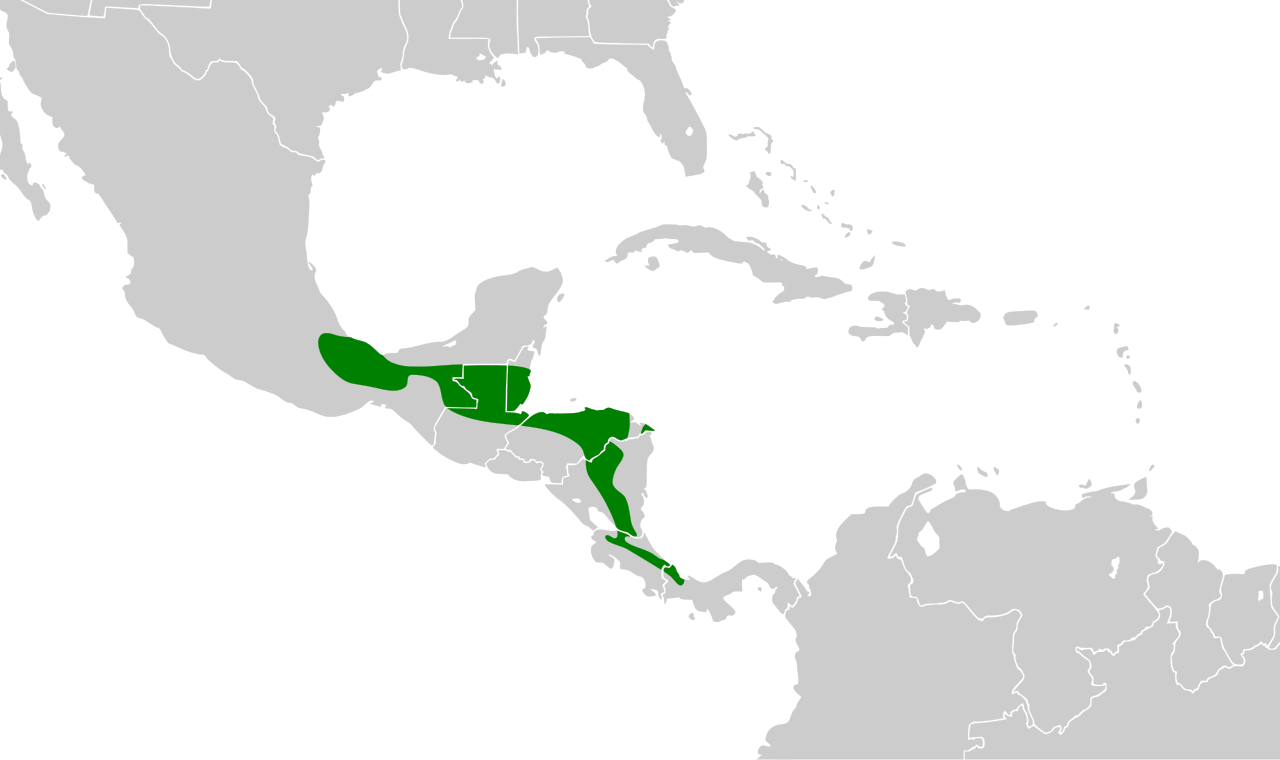
Cotingas range across Central America and tropical South America, with a strong preference for humid tropical forests and forest-edge habitats. Some species also occur in open woodlands and coastal mangrove areas.
How big do Cotingas get?
The family covers a striking size spectrum, from the 12–13 cm fiery-throated fruiteater to the 48–51 cm Amazonian umbrellabird. That makes Cotingas one of the most size-diverse songbird lineages in the Neotropics.
What do Cotingas eat?
Cotingas are primarily frugivorous, feeding mainly on the fruit they forage in their forest habitats. Their broad, hook-tipped bills are well suited for handling and processing those fruits.
How many Cotinga species are there?
The family Cotingidae contains 66 species distributed across 24 genera. The family name was originally introduced by Charles Lucien Bonaparte.
More in Parrots And Songbirds 1-17
Spotted an error? Know more?
This is a living reference — every entry is fact-audited, and reader corrections feed straight into our audit queue. Suggest an edit · See this site's audit record